Whether you're working at a desk, commuting, or relaxing on the couch, it's easy to spend hours each day sitting.
But have you noticed that your hips feel stiff when you stand up? Or that your lower back feels uncomfortable after sitting for a long time?
One possible contributor is limited hip flexor mobility.
At Reset Chiropractic & Wellness Center in Bloomingdale, IL, we often help patients understand how their hips and lower back work together—and why improving movement quality can sometimes make a meaningful difference.
What Happens to Your Hip Flexors When You Sit?
Your hip flexors are a group of muscles at the front of your hips that help lift your knees and move your thighs toward your trunk. One important muscle, the iliopsoas, also connects to your lumbar spine.
When you sit, your hips remain in a flexed position. Spending long periods in this position, especially without regular movement, may contribute to stiffness and reduced tolerance for hip extension in some people.
That doesn't mean sitting automatically makes everyone's hip flexors permanently short. But it does mean people who spend much of the day sitting may benefit from checking how comfortably their hips move.
Can Tight Hip Flexors Cause Low Back Pain?
Your hips and lower back are designed to work together.
When you walk, run, or extend your leg behind you, your hip needs adequate extension. If that movement is limited, you may compensate by arching through your lower back.
For some people, these compensations may contribute to discomfort in the lower back or hips, particularly during activities requiring hip extension.
However, not all low back pain comes from tight hip flexors. Joint mobility, muscular strength, spinal sensitivity, and movement control can all play a role.
That's why identifying the source of the restriction matters more than simply stretching wherever something feels tight.
One of Our Favorite Exercises: The Half-Kneeling Hip Flexor Stretch
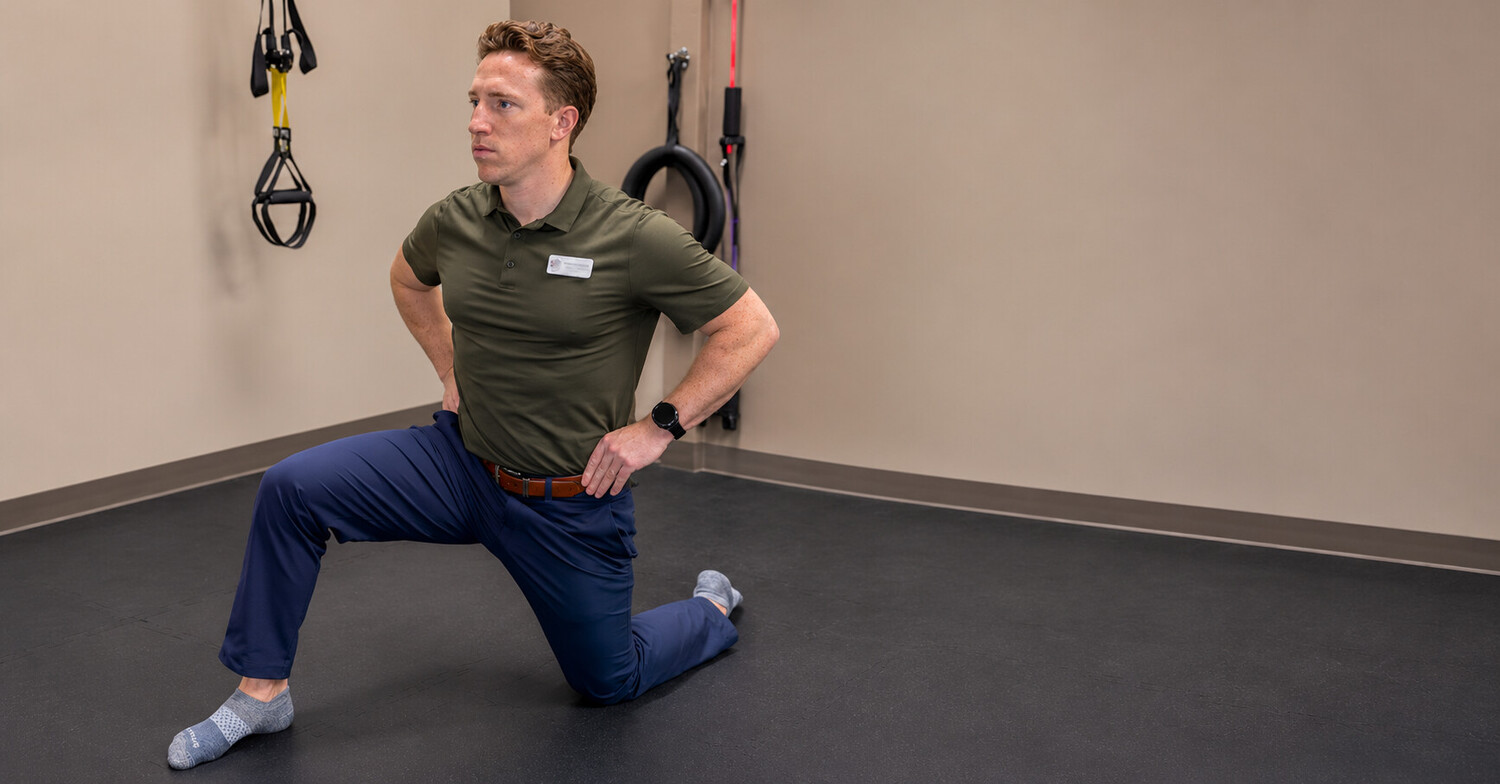
The half-kneeling hip flexor stretch is a simple exercise that can help improve comfort with hip extension.
But technique makes a difference.
A common mistake is shifting forward by excessively arching the lower back. While you may feel like you're stretching farther, the movement may be coming primarily from your lumbar spine instead of your hip.
How to Perform the Stretch Correctly
-
Begin in a half-kneeling position with one knee on the floor and the opposite foot planted in front.
-
Keep your trunk upright.
-
Gently tuck your pelvis under, creating a slight posterior pelvic tilt.
-
Squeeze the glute on the kneeling side.
-
Shift forward slightly while keeping your lower back from arching.
You should feel a comfortable stretch at the front of the hip on the kneeling side—not pressure or pinching in your lower back.
Watch Dr. Ted demonstrate the proper technique and a common mistake to avoid.
Avoid forcing the movement or pushing into pain. If the stretch aggravates your symptoms, stop and have your movement evaluated.
What If Stretching Doesn't Help?
Sometimes hip stiffness is related to reduced mobility. Other times, the issue involves movement control, muscle weakness, spinal sensitivity, or a combination of factors.
At Reset, our approach begins with understanding why you're having trouble moving comfortably.
Depending on your symptoms, your evaluation may include assessing:
-
Lumbar spine mobility and symptom response.
-
Hip range of motion, particularly hip extension.
-
Pelvic and trunk control.
-
Strength and functional movement patterns.
-
How your symptoms change with specific movements and positions.
Treatment may include individualized physical therapy, chiropractic care, targeted mobility exercises, and progressive strengthening.
Persistent pain, especially pain radiating down the leg with numbness, tingling, or weakness, should not simply be assumed to come from tight hip flexors.
Move Better, Not Just More
The goal isn't to stretch harder. It's to move more effectively.
If you spend much of your day sitting, regular movement breaks and appropriately selected mobility exercises may help you feel more comfortable.
And if recurring hip stiffness or low back pain is limiting your activities, an individualized assessment can help determine what actually needs attention.
Reset Chiropractic & Wellness Center provides personalized chiropractic and physical therapy care in Bloomingdale, IL, serving patients from Roselle, Medinah, Itasca, and surrounding communities.
Theodore D'Amico
Contact Me