When patients tell us they're working on their core strength, we often hear about planks, crunches, sit-ups, and back extensions.
These are all legitimate core strengthening exercises. The problem isn't the exercises themselves—it's that many people stop there. Most traditional core exercises emphasize the sagittal plane, which involves forward and backward movement or resisting movement in those directions. But your core also needs to control side-to-side movement and rotation.
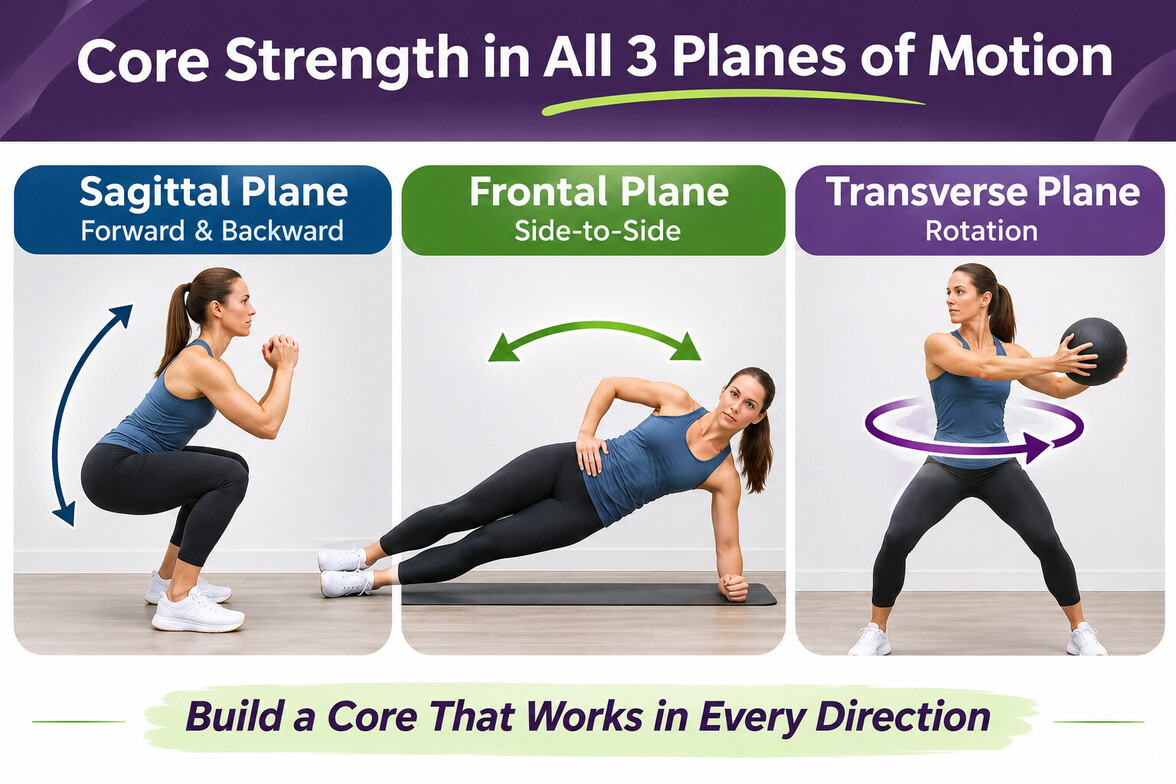
A strong core needs to create, control, and resist movement in all three planes of motion: sagittal, frontal, and transverse.
This is something that can be overlooked not only in the gym, but sometimes during chiropractic care or physical therapy when exercise programs aren't based on a comprehensive functional movement assessment. Someone might have excellent strength during a plank or sit-up but struggle to stabilize their pelvis during a side bridge or control rotation during a Pallof press.
The question isn't simply whether your core is strong. It's whether your core is strong and stable in every direction—or whether there's a weak link you haven't identified.
What Are the Three Planes of Motion?
Your body moves in three primary planes. Effective core strengthening should challenge your ability to create, control, and resist movement in all three.
1. Sagittal Plane: Forward and Backward
This includes bending forward, extending backward, squatting, and lifting. Your core helps control spinal position during these movements.
Core exercise examples:
-
Dead bugs
-
Bird dogs
-
Squats and deadlifts
2. Frontal Plane: Side-to-Side
This includes side bending, shifting your weight, and controlling your pelvis while standing on one leg. Your core helps resist excessive side bending and maintain pelvic stability during walking or running.
Core exercise examples:
-
Side bridges
-
Suitcase carries
-
Single-leg stability exercises
3. Transverse Plane: Rotation
This includes twisting, reaching across your body, and rotating during activities such as golf, tennis, and throwing. Your core needs to create, control, and resist rotational forces.
Core exercise examples:
-
Log rolling
-
Pallof presses
-
Controlled rotational exercises
Can You Be Strong and Still Have a Weak Link That Contributes to Injury?
Absolutely! And this isn't just something we see in athletes or people who work out regularly. It can affect anyone, whether you're lifting weights at the gym, walking or running, doing yard work, or tackling projects around the house. You might be incredibly strong in one plane of motion but lack the strength or motor control needed in the other two. For example, someone might have an impressive squat or deadlift but struggle to maintain pelvic stability during a side bridge or resist rotation during a Pallof press.
The same thing can happen during everyday activities. You might have no trouble lifting a heavy bag of mulch but struggle when carrying it across the yard, twisting to place it down, or reaching sideways to move something.
Being strong in one direction doesn't automatically mean you're strong in all three.
These differences become especially important when activities require your body to control forces in multiple directions at once—which happens far more often than we realize. Over time, limitations in strength or movement control may contribute to compensatory movement patterns, excessive loading of certain tissues, and potentially recurring pain or injury.
The goal isn't just to be strong at the gym or around the house. It's to have the strength and stability to move well in every direction.
What About Differences Between Your Right and Left Sides?
Another important consideration is asymmetry. You might demonstrate excellent rotational control in one direction but struggle in the other. Or you may be able to perform a side bridge easily on your right side but have significantly less control on your left.
These differences aren't always obvious during traditional strength exercises. While not every asymmetry is problematic, meaningful differences in strength or motor control may become relevant when your body is repeatedly exposed to demanding activities.
Sometimes the issue isn't a lack of overall strength. It's how that strength and stability are distributed across different planes of motion—or between the right and left sides.
Why Does Your Weak Link Matter for Walking or Running?
Think about walking or running—two activities that require your body to control forces in all three planes of motion with every step. Your core helps stabilize your trunk and pelvis as you move forward, shift your weight from one leg to the other, and rotate naturally through your torso.
Walking or running may look like primarily forward-moving activities, but both require stability and coordination in all three planes.
For example, someone may have excellent forward-driving strength but lack the side-to-side pelvic stability needed when standing on one leg during each stride. Or they may struggle to control rotation through their trunk and pelvis. These limitations may contribute to compensatory movement patterns and recurring discomfort, particularly as walking or running distances increase. The same concept applies to lifting, golf, gardening, and everyday activities.
Not every movement limitation causes pain or injury. But identifying where your movement control breaks down gives us an opportunity to make your exercise program more effective.
Can Core Weakness Contribute to Recurring Low Back Pain?
Yes. Although low back pain has many possible causes, inadequate core strength, endurance, or movement control may contribute to symptoms in some individuals. Your core muscles work together to support and control your spine and pelvis during everyday activities.
If you have excellent control when bending forward but struggle to resist side bending or rotation, certain activities may place demands on your body that you're not adequately prepared to handle. For example, you might tolerate squats and deadlifts well but experience recurring low back discomfort during prolonged walking, running, or activities involving rotation. This doesn't necessarily mean your core is weak overall. You may have a limitation in a particular movement pattern.
That's why an individualized core stability program should address your specific movement limitations rather than relying on the same exercises for everyone.
How Do We Find Your Weak Link?
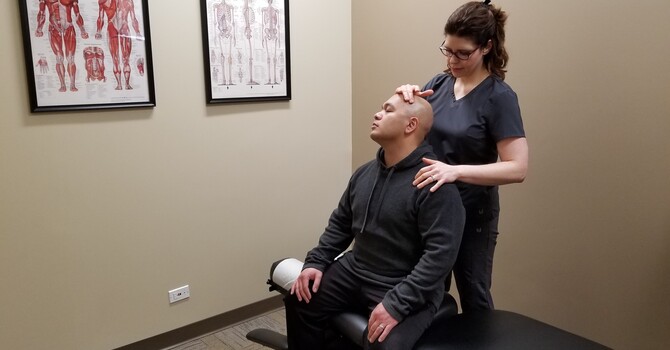
At Reset Chiropractic & Wellness Center in Bloomingdale, IL, we don't simply hand everyone the same list of core exercises. We evaluate how you move. Our approach incorporates:
-
McKenzie Method (MDT): Evaluates spinal symptoms and responses to repeated movements and positions to help guide treatment and exercise selection.
-
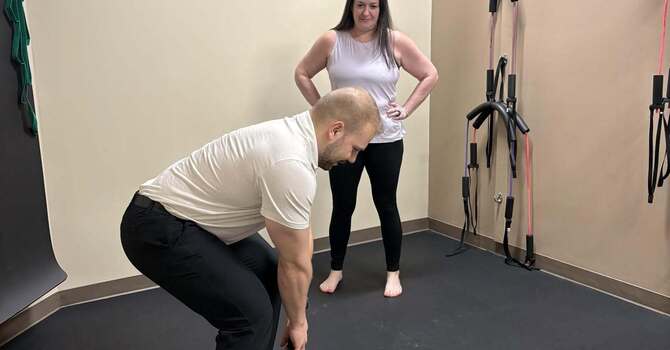
Selective Functional Movement Assessment (SFMA): Helps identify dysfunctional movement patterns and possible contributing factors in patients experiencing pain.
-
Functional Movement Screen (FMS): Evaluates fundamental movement patterns, including asymmetries and limitations that may help guide exercise programming.
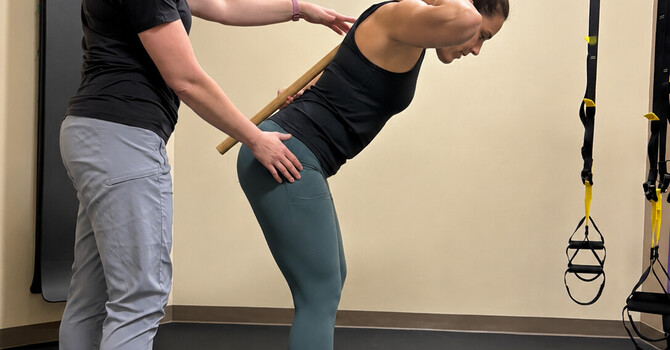
We also observe how well you control your trunk and pelvis during exercises that challenge different planes of motion. For example, you may demonstrate excellent control during a dead bug but struggle to prevent your pelvis from dropping during a side bridge. Or you may have good rotational control in one direction but demonstrate compensations when rotating the opposite way. These findings help us identify which movements need more attention.
Rather than spending all your time doing exercises you're already good at, we can direct more attention toward the movement patterns that need improvement.
Train Your Weak Link, Not Just Your Favorite Exercises
It's natural to gravitate toward exercises we're good at. But if you're always doing planks and crunches while avoiding rotational or side-to-side exercises, your core training may be missing something important. A more complete core strengthening program challenges your ability to control movement in all three planes while considering differences between your right and left sides.
Exercises should also be appropriately challenging, allowing you to improve strength and motor control without relying on excessive compensatory movements.
The goal isn't just to build a stronger core. It's to build a core that works well in every direction.
For patients looking to continue building strength and improving movement quality, our RESET Fitness small-group classes incorporate functional strength training, core stability, and progressive exercise.
Core Strengthening and Physical Therapy in Bloomingdale, IL
At Reset Chiropractic & Wellness Center, we help patients from Bloomingdale, Roselle, Medinah, Itasca, and surrounding western Chicago suburbs improve strength, stability, and movement control.
Our approach combines chiropractic care, physical therapy, and functional movement assessments to identify weaknesses and asymmetries that traditional exercise programs may overlook.
Whether you're dealing with recurring low back pain, experiencing discomfort while walking or running, or simply looking to improve your fitness, we develop individualized exercise programs based on how your body moves.
You don't necessarily need more core exercises. You may need the right exercises for your specific weak links.
Located at 148 S Bloomingdale Road, Suite 107, Bloomingdale, IL 60108, our team has been helping people move better and stay active since 2008. Ask us about a functional movement assessment or schedule an appointment online.